
Karen Blixen and her strong connection with the natural world
- Feb 22
- 4 min read
Updated: Apr 6
Since I first watched Out of Africa, directed by Sydney Pollack, I have admired the Danish novelist Karen Blixen (1885–1962). Writing under the pen name Isak Dinesen, she holds a distinctive place in twentieth-century literature as a master storyteller deeply shaped by the landscapes she called home.
The epic, award-winning film adaptation of her memoir, Out of Africa, has now marked its 40th anniversary. For me — and for millions around the world — the performances of Meryl Streep and Robert Redford brought romance and grace to her extraordinary life story.
One of the film’s most memorable scenes unfolds when Denis (Robert Redford) takes Karen (Meryl Streep) on her first flight in a small monoplane over the sweeping landscapes of Kenya. As they glide above a lake near Nairobi, thousands of flamingos rise at once, stirred by the sound of the engine, forming a radiant pink cloud around them. The moment is majestic and poetic — a rare harmony between nature and human feeling. Overcome by beauty, Karen reaches for Denis, and for a few suspended seconds, amid wind and endless sky, they hold hands in silent, unspoken love.



Meryl Streep and Robert Redford brought romance and grace to Karen Blixen’s life story.
Karen Blixen as an Environmental Thinker
Although Blixen did not use the modern vocabulary of environmental activism, her writings reveal an ecological sensibility that was far ahead of her time. During the years she managed a coffee plantation in British East Africa (now Kenya), near the Ngong Hills outside Nairobi, she developed an intimate relationship with the land, its wildlife, and the local communities.
In Out of Africa, nature is never a mere backdrop to human drama; it is a living presence. She writes of lions, antelopes, storms, and vast plains with reverence and humility. Her perspective resists domination and exploitation. Instead, she emphasizes coexistence, balance, and respect for ecological rhythms.
Blixen was acutely aware of how colonial agriculture altered landscapes. Though she participated in plantation life, her reflections often reveal ambivalence about imposing European systems upon African ecosystems. Her later writings express nostalgia and sorrow for environmental loss, suggesting a profound awareness of fragility—both cultural and ecological. She is also widely admired as a visionary for her profound understanding of the long-term impacts of colonialism.
Karen Blixen as a Literary Ecologist
As a novelist and short-story writer, Blixen is renowned for her lyrical prose and mythic imagination. Her style blends realism with the fantastical. In her fiction, landscapes are never incidental; they shape character and destiny. Storms mirror emotional moods, vast plains echo existential solitude, and changing seasons reflect cycles of loss and renewal. Nature frequently functions as a moral and symbolic force.
She often frames stories within stories, evoking oral traditions and emphasising humanity’s long-standing relationship with myth and environment.
Her Strong Connection with the Natural World
Blixen’s years in Kenya were transformative. She described Africa as a place where she felt profoundly aligned with existence itself. The African landscape—its light, altitude, wildlife, and vast silence—became central to her identity.
In Out of Africa, the Ngong Hills are not merely scenery but also her companions. She famously wrote of loving Africa for “the grass and the air,” transporting a sense of belonging that transcended ownership. Animals are treated as sovereign beings; even predators are described with admiration and respect.
After illness forced her return to Denmark, her longing for Africa never faded. The natural world became a site of memory and spiritual continuity. At her family home, Rungstedlund—now a museum, which I had the honour to visit—she cultivated her garden, maintaining a tactile and emotional connection to the land.
Seven Lessons About Nature from Karen Blixen
1. The Aptitude of Stillness
Blixen observed that “civilized people” have lost the ability to be truly quiet. She believed humans must take lessons in silence from the wild in order to be accepted by it, noting that no domestic animal can match the profound, alert stillness of a wild creature.
2. Acceptance of Life and Death
She found beauty in the Kikuyu custom of leaving the dead above ground for nature to reclaim. This shaped her view that becoming “one with Nature” at the end of life was not tragic but natural—a return to the greater order of existence.
3. The Rhythm of Africa
Blixen believed that to live fully in nature, one must attune oneself to its rhythm. Immersed in the scents and sounds of the wilderness, she felt her heartbeat slow and her entire nervous system relax, leading to a primal joy and a deep sense of belonging—of being exactly where she ought to be.
4. Nobility in Untamed Spaces
She perceived an innate nobility in the wild that she felt was lacking in modern European civilization. Living close to nature, she believed, allowed human beings to rediscover ancient truths that urban life often obscures.
5. Animals Possess Dignity
Her portrayals of lions, antelopes, and birds were never sentimental. They were sovereign beings with their own purpose. Respect wildlife as fellow participants in existence, not as background scenery.
6. We Belong to the Land — We Do Not Own It
Living on her coffee farm in colonial Kenya, she came to see that ownership is an illusion. The land ultimately shapes us more than we shape it. Stewardship is wiser than control.
7. Stories Grow from the Land
Blixen believed that landscape shapes narrative. The rhythms of Africa deeply influenced her storytelling voice. Our environment influences our imagination more profoundly than we realise.
Legacy
Karen Blixen’s legacy is not that of a political environmentalist but of a literary ecologist. Through sensitivity and moral reflection, she articulated an ethic of attentiveness—of listening to the wind, observing animal life, and respecting the autonomy of place.
Her stories invite readers to reconsider humanity’s position within, rather than above, the natural world. In doing so, she remains a powerful voice for ecological awareness expressed through art rather than activism.
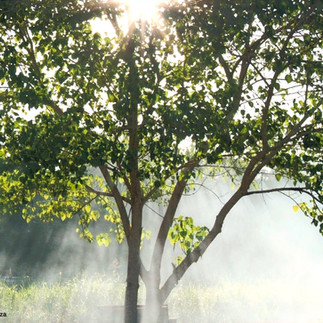
Karen Blixen passed away on 7th September 1962, in her bed at Rungstedlund, surrounded by close family members. She was buried under the spreading branches of a large, old beech tree at the foot of Ewald's Hill in the bird sanctuary at Rungstedlund.




Photos: Silvana Lucolli *(Blixen's House in Denmark)*


Comments