
Feathers and Foliage: A Journey Through Gardens and Urban Parks.
- Silvana Lucolli

- Apr 20, 2024
- 3 min read
Updated: Jul 20, 2025


It is spring again and last week, I purchased a delightful little illustrated book featuring the most common birds, both residents and visitors, found in the gardens and parks of Denmark, titled "På Folderbrætted" by Hermod Karsen (2021).
A garden holds significant value for birds as well. If you reside in a city with urban parks and well-treed streets, you might be surprised by the variety of bird species that could grace your garden.
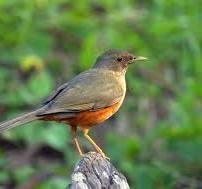
During my childhood, my grandparents' house was situated in a rural area where birds played a vital role in my grandmother Jacy's garden. Not a spring went by without my cousins and me discovering bird nests among the bushes and trees, observing chicks chirping for food behind their parents as they fledged. My grandmother often sat on a bench at sunset, enjoying the symphony of birds. I still vividly recall how she taught me to recognize the extensive repertoire of the thrush Turdus rufiventris , a bird that was a constant presence in her garden.
Following a year spent in the United States participating in bird biomonitoring programs, I returned to Brazil captivated by the abundance and quality of illustrated materials available for bird identification in USA. The United States boasts a rich tradition of Birdwatchers Clubs, and I was keen on looking for similar interest in my hometown. Hence, I endeavored to enable people in my city to identify and appreciate the diverse birdlife residing in the urban parks of Curitiba, also known as the Ecological Capital of Brazil.
Collaborating with the Brazilian nature photographer Zig Koch, we embarked on a project to create a concise bird identification guide. Our efforts received a boost when we secured sponsorship from the "Fundação O Boticário de Proteção à Natureza."
The guide, crafted entirely from recycled paper except for a central page that folds out four times, features 62 color photographs aimed at encouraging Curitiba residents to acquaint themselves with the city's birds residents. At the time of its publication, the comprehensive list included 116 species. The Foundation "O Boticário" distributed this guide free of charge to 30,000 Curitiba residents. Additionally, in "Observing Birds in Curitiba" - a practical itinerary, we provided insights on bird recognition, observer conduct, recommended equipment, and methods to attract birds to homes, gardens, and even apartment terraces.
Among the motivations for birdwatching, I emphasized: "Disregarding birds means forsaking a kind of sixth sense. They offer insights into the time of day, seasons, weather conditions, and most importantly, environmental changes. In the last century, English miners employed canaries to monitor air quality within mines. These miners carried caged canaries and observed their behavior; cessation of singing, convulsions, or death signaled an immediate need to evacuate the mine."
Gardens, parks and streets reforestation are also an important part of climate change strategy, the planted trees and the other vegetation will not just absorb carbon, reduce the local temperature but also provide a vital ecosystem services to local communities. Birds and mammals, insects, reptiles among a serie of wildlife beings will enjoy the improvement of habitats and landscapes.




My Memories:
Silvana (red hair fashion) Birdwatching in Curitiba, Brazil (1991).
Southern lapwing Vanellus chilensis, a common sight at urban parks, Curitiba, Brazil.
The Rufous bellied Thrush Turdus rufiventris, one of our favourite vocal repertoires.
"Observando Aves em Curitiba", authors: Silvana Lucolli & Zig Koch. A little field guide printed in recycled paper for identifying birds in Curitiba. ( 1991 the 1st. edition and 1993 the 2nd ed.).
Featuring colorful photographs by Zig Koch in central pages.
Here, my Italian grandfather enjoying the garden of my grandmother Jacy.


Comments